A lawn wakes from the roots first. The green you see in November was decided underground in October.
What happens to Melbourne lawns in October?
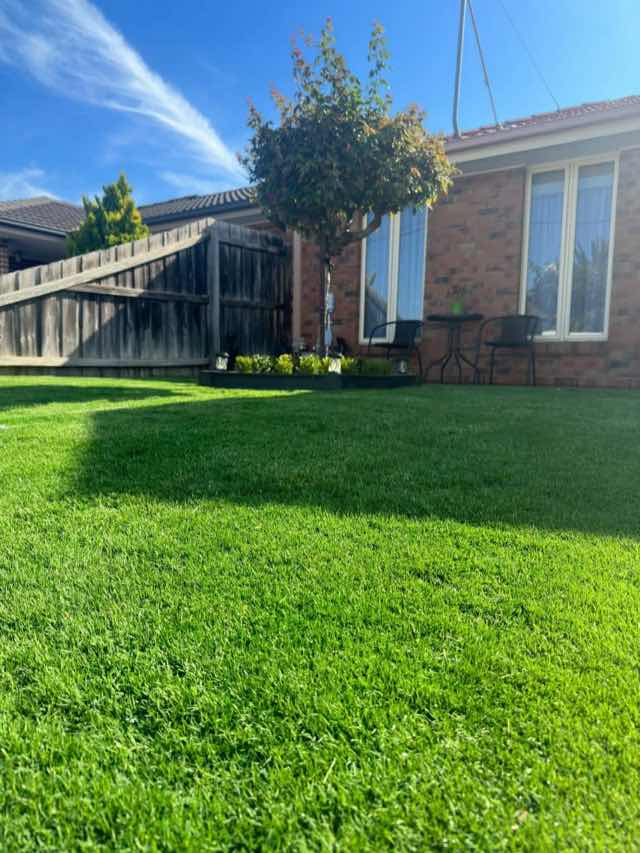
October is when lawns in Melbourne's inner south-east split into two groups. On one side of the fence, the couch, kikuyu, buffalo and zoysia lawns that sat pale and straw-coloured through July are greening from the base up. On the other side, the tall fescue and rye lawns that looked their best in winter are about to meet their first hot week and start to sulk.
What's driving both is soil temperature, not air temperature. Warm-season grasses start to green once the soil passes about 15°C, usually from late September, and wake properly as it keeps warming through October and early November. Summer grass (crabgrass) starts germinating in the same window. The decisions you make in the next four to six weeks decide whether you spend summer with a thick lawn or a weedy one.
Which type of lawn do I have?
Pull back the leaf and look at how it spreads.
- Couch: fine leaf, runs above and below ground, goes golden-brown in winter. Loves full sun, hates shade.
- Kikuyu: broad, bright leaf, thick above-ground runners. Aggressive, fast to recover, quick to invade garden beds.
- Buffalo: wide, soft leaf, the most shade-tolerant of the warm-season grasses.
- Zoysia: dense, slow-growing, fine to medium leaf. Low-maintenance once established.
- Tall fescue or rye: clumping, no runners, stays green in winter. Common in older shaded front yards.
If it spreads by runners and went pale in winter, it's warm-season. If it clumps and stayed green, it's cool-season. Many inner-south-east lawns are a patchwork of both, which is why one rule rarely fits the whole yard.
What should I do to my lawn in October?
1. Mow higher than you think
The single most common spring mistake is cutting short to "tidy up" after winter. Short grass grows shallow roots, and shallow roots are what fail in January. As a guide: couch 15 to 30mm, zoysia 20 to 40mm, kikuyu 30 to 50mm, buffalo 40 to 60mm (higher in shade), tall fescue 30 to 50mm (the top of the range through summer). Never take more than a third of the leaf in one cut. If you have a mowing contractor, these are the numbers to give them.
| Grass | Cut height | Good to know |
|---|---|---|
| Couch | 15 to 30 mm | Loves full sun, hates shade |
| Zoysia | 20 to 40 mm | Dense and slow-growing |
| Kikuyu | 30 to 50 mm | Fast to recover, quick to invade garden beds |
| Buffalo | 40 to 60 mm | Higher in shade |
| Tall fescue | 30 to 50 mm | The top of the range through summer |
Never take more than a third of the leaf in one cut.
2. Get ahead of summer grass
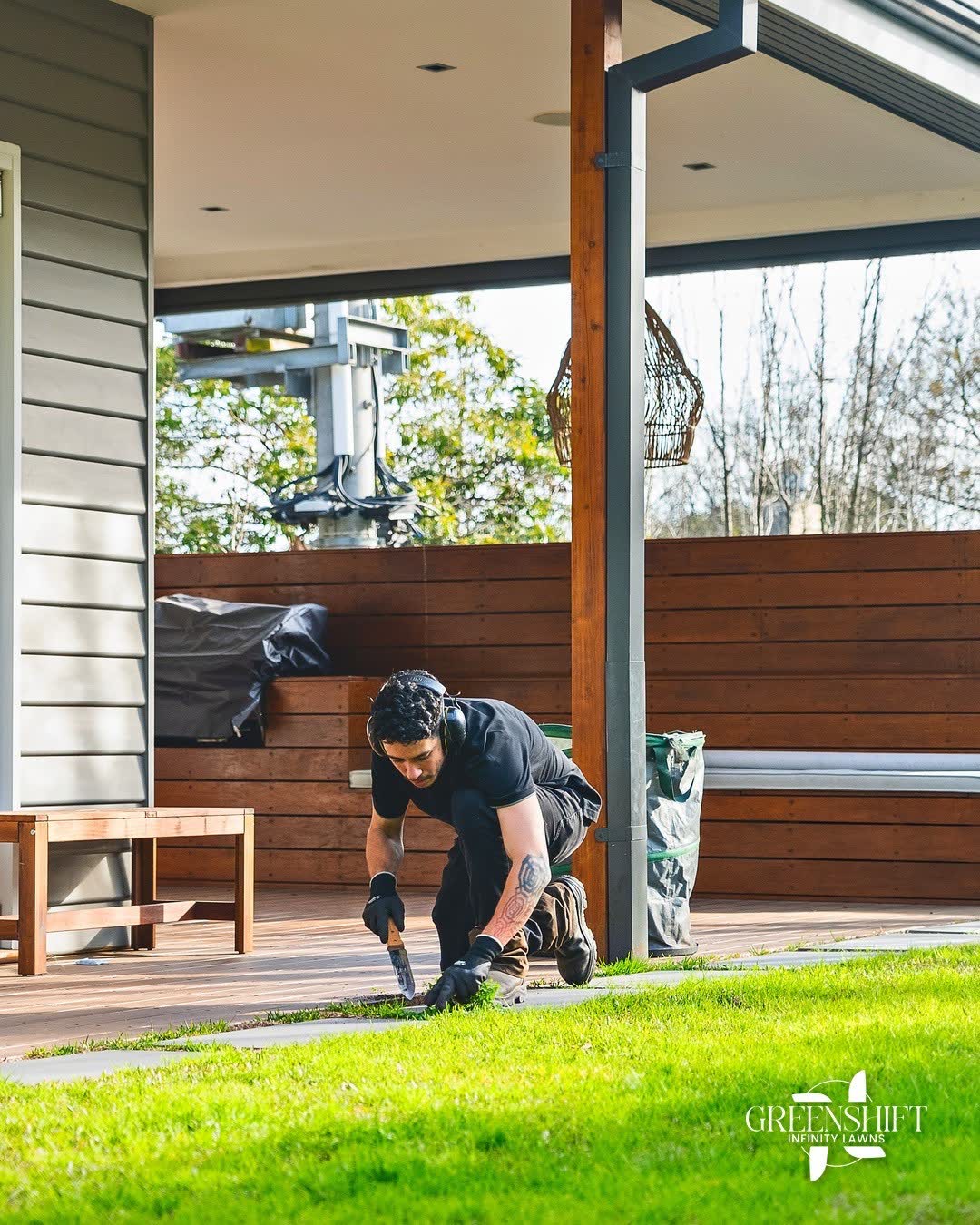
Summer grass is an annual. It comes back from seed every spring, and once it's up it's hard to remove cleanly. The first defence is the lawn itself: grass mown at the right height and fed as it wakes shades the soil and leaves summer grass seed fewer gaps to settle in. Odd plants are best pulled by hand while they're young, before they set seed.
Where summer grass took over a lawn last summer, that's severe pressure, and a pre-emergent is the one-off tool for it. It forms a barrier at the soil surface that stops this season's seed establishing, but only if it goes down before germination, which in our area means late September to mid October. It doesn't clear the seed already in the soil, so a thick lawn still does the long-term work. Check the label covers your grass: some pre-emergents can't go on tall fescue or rye, and others exclude certain couch or zoysia varieties. Coring or scarifying after it goes down breaks the barrier, so that work comes first. It stops new grass seed just as well as weed seed, so keep it off anywhere you plan to seed or patch this spring.
If you're reading this after mid October and summer grass is already up, the window has passed for this year: hand-pull it before it seeds, and if the pressure is severe, plan ahead for next September.
3. Feed the soil, not just the leaf
A spring feed for warm-season lawns should go on once growth is visible, not before, otherwise you're feeding the weeds that wake first. A quick-release nitrogen hit gives you a green fortnight and a flush of mowing. A balanced feed with soil carbon and seaweed builds the root zone that carries the lawn through February. Tall fescue and rye take their spring feed now, then only light nitrogen once the heat arrives, when it feeds lawn disease more than the grass; their other main feed is in autumn.
4. Train the roots before the heat
Water deeply and less often from October. One good soak, roughly 20 to 25mm, that wets the soil 100 to 150mm down teaches roots to chase water downward. Daily sprinkles keep the roots in the top few centimetres, right where the January sun bakes the clay. Check current Melbourne water use rules before setting a timer.
What should I avoid doing to my lawn in spring?
- Don't scalp warm-season lawns in October unless you're deliberately renovating. On clay, a scalped lawn invites weeds into every bare spot.
- Don't dethatch a cool-season lawn now. It's heading into its hardest season; leave renovation until autumn.
- Don't let weeds flower. A weed pulled before it seeds is next spring's weed gone too.
- Don't fertilise before rain is forecast to be heavy. On compacted clay, it runs off rather than soaking in.
How do I deal with bindii and clover in spring?
Broadleaf weeds flower and set seed through spring. Bindii is the one that matters most in the inner south-east, because its prickles mean seed for next year and sore feet for this one. Pull it while it's still a flat green rosette, as early in spring as you can, and get the root out with it; by mid October many plants have already flowered, and the prickles follow within weeks. Clover is usually a sign of low nitrogen rather than a disaster; a good feed often tips the balance back to the grass. Where weeds cover most of a lawn, that's a different conversation, and Pull it or spray it? explains how weed pressure decides it.
Common questions
When should I fertilise my lawn in spring in Melbourne?
Feed warm-season lawns once growth is visible, not before, otherwise you're feeding the weeds that wake first. Tall fescue and rye take their spring feed in October, then only light nitrogen once the heat arrives; their other main feed is in autumn.
What height should I mow my lawn in spring?
As a guide: couch 15 to 30 mm, zoysia 20 to 40 mm, kikuyu 30 to 50 mm, buffalo 40 to 60 mm (higher in shade) and tall fescue 30 to 50 mm (the top of the range through summer). Never take more than a third of the leaf in one cut.
When do I apply pre-emergent for summer grass in Melbourne?
Before germination, which in Melbourne's inner south-east means late September to mid October. It doesn't clear the seed already in the soil, and it stops new grass seed just as well as weed seed, so keep it off anywhere you plan to seed or patch. Check the label covers your grass.
How much should I water my lawn in spring?
Water deeply and less often from October. One good soak, roughly 20 to 25 mm, that wets the soil 100 to 150 mm down teaches roots to chase water downward. Check current Melbourne water use rules before setting a timer.
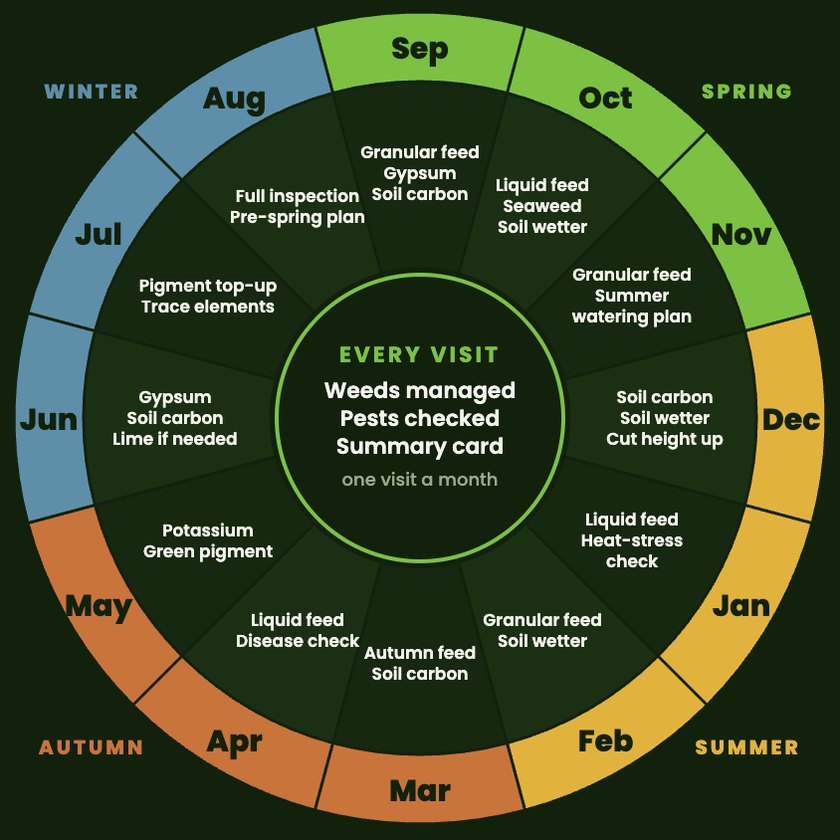
Want a regenerative lawn care specialist to plan your lawn's year? The Infinity Lawns Program is 12 specialist visits a year, and it starts with a Lawn Performance Assessment, included as your first visit: we identify your grass, test the soil and write your lawn's 12-month program from there.
See plans and pricesRather start on your own? The Art of Mowing: three habits for a lawn that holds through summer.
Lawn care as custodianship: we facilitate rather than impose, listening as much as we tend, and working with the rhythms of the living soil rather than against them.
Greenshift Infinity Lawns acknowledges the Wurundjeri Woi-wurrung and Bunurong / Boon Wurrung peoples of the Kulin Nation, the Traditional Owners and Custodians of the lands and waters of Melbourne's inner south-east on which we work. We pay our respects to Elders past and present, and recognise their continuing connection to this land, its waters, and its skies.